
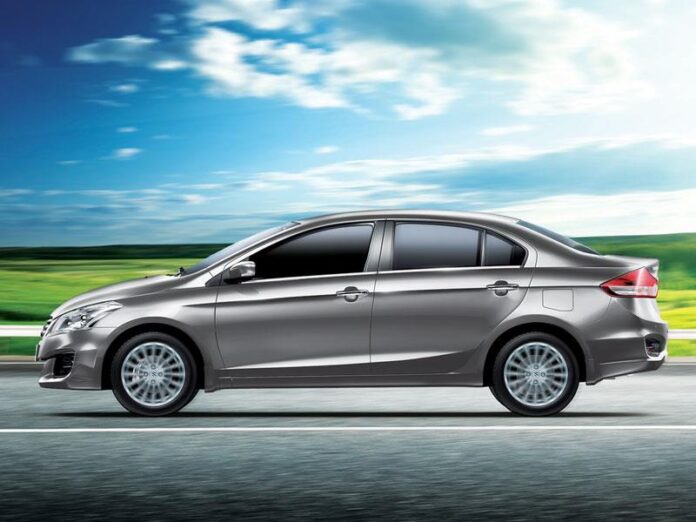
If you have in mind a sedan that is friendly to your budget but does not feel “small” or austere, surely the Suzuki Ciaz He has already made eyes at you. It is presented as one of the most sensible decisions you can make; especially the units that came out between 2016 and 2020 have built an enviable reputation for being warriors, easy to maintain and for having an interior space that leaves you speechless.
It is a car designed to survive daily traffic and enjoy getaways with the family, shining especially for how little it asks for gasoline and for a cabin where no one travels cramped, something rare to see in its category. But let’s be honest: like any car that already has its miles traveled, it has its tricks and weak points that should be reviewed with a magnifying glass.
Before you drop your savings for a Ciaz second-hand, it is worth understanding how it ages, how it feels behind the wheel after a few years and, most importantly, what are those “headaches” or mechanical failures that those who already have one in their garage complain about the most. In the following lines, we are going to break down the reality of this model so that your next investment is a total success.
General characteristics of the Suzuki Ciaz 2016-2020
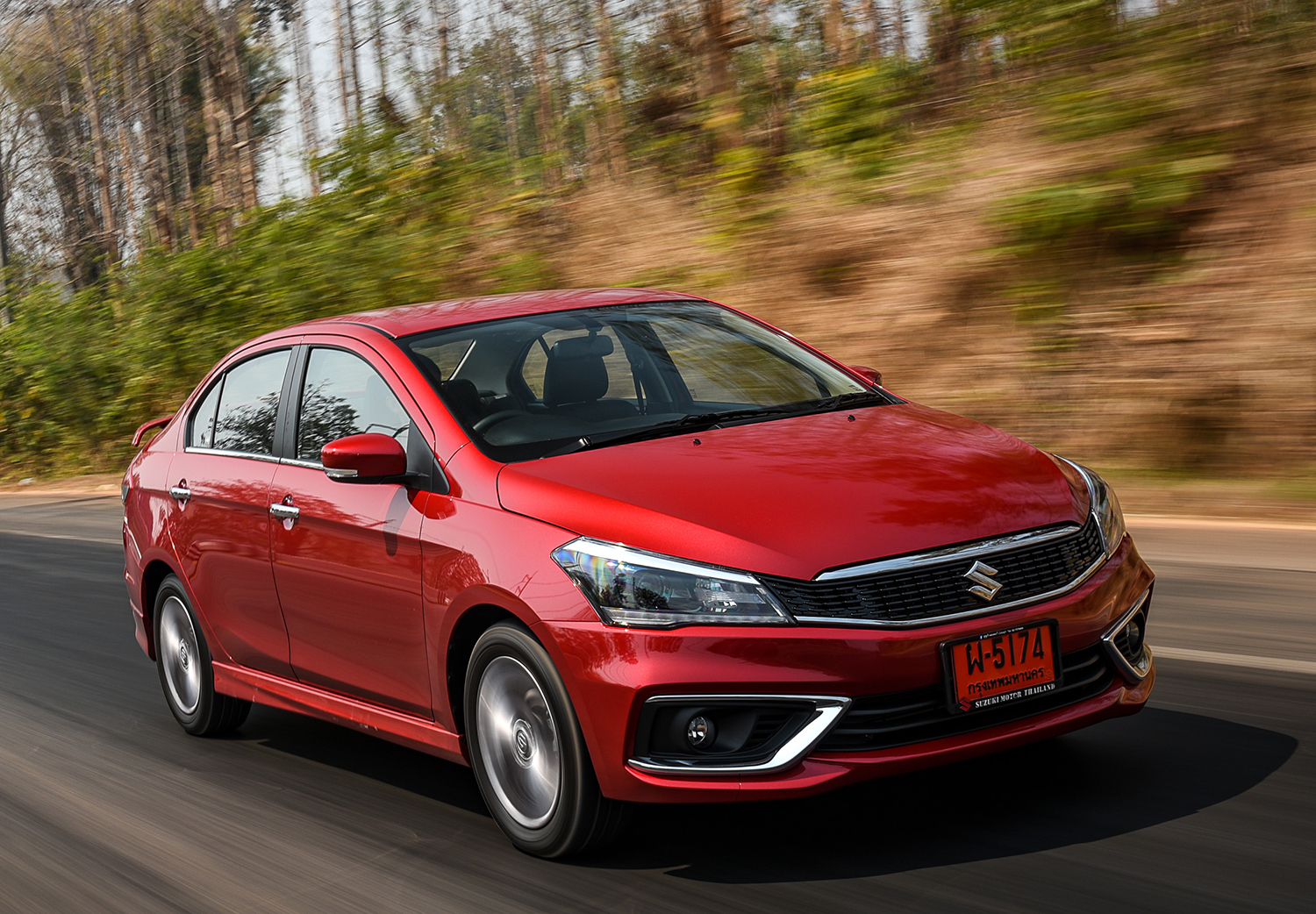
To understand the phenomenon behind its success, you have to lift the hood and look into the cabin. suzuki He did not try to create a sports car, but rather an ally for everyday life: a car where logic and economy rule over strong emotions.
Under the hood: Almost all the units you will see are equipped with the reliable 1.4-liter 4-cylinder engine (the famous K14B). It is not a racing car, as it delivers between 92 and 100 horsepower with 96 lb-ft of torque, but it more than performs. You will find it with a 5-speed manual gearbox for those who prefer control, or a 4-speed automatic for those looking for comfort in traffic.
Fuel savings: This is where the Ciaz stick out his chest As it is a very light car (it barely marks a ton on the scale), its engine does not have to work too hard, making it one of the sedans that will make you visit the gas station the least within its segment.
What does it bring inside?: Considering what you pay, the equipment is quite decent. If you go for the top versions (like the GLX), you already have luxuries such as push-button ignition, a screen with connectivity, a parking camera, automatic air conditioning and aluminum wheels that give you a better view.
Total width: If you are looking for space, here is the “ace” up your sleeve. It is, without a doubt, the most generous in its category at the back; three adults fit without fighting over the knees. In addition, its trunk of almost 495 liters is wonderful for storing the entire family’s suitcases without juggling.
The best of your proposal: Its winning recipe is simple but effective: a lot of comfort, a very low maintenance cost, a design that does not go out of style and that famous “guarantee” of durability that Japanese engines usually offer.
Most common faults of the Suzuki Ciaz 2016-2020
Although it is an extremely noble car, it is not perfect, and over the years some details have come to light that are repeated among its owners. If it keeps you up at night knowing what problems a problem could give you. Suzuki Ciazhere I tell you the most common “tricks” so that they don’t take you by surprise.
Those strange noises in the suspension
One of the complaints you will hear the most has to do with the front axle. With daily use and the poor condition of our streets (potholes, bumps and cobblestones), the suspension tends to complain soon, releasing a dry knock that can be annoying.
Typically, the culprit is premature wear of the bushings, linkages, or shock absorber bases. It is not something that is going to leave you stranded in the middle of the street, but it does take away that feeling of smoothness when driving and will force you to go to the workshop to renew those parts.
Interiors that stand the passage of time
To achieve such a competitive price, suzuki had to cut back on some materials. The plastics on the dashboard and doors are somewhat rigid and get scratched just by looking at them. Additionally, many users notice that the steering wheel cover and shift knob begin to peel or lose their original texture much sooner than one would expect. If the previous owner was not careful, the interior may look older than it really is.
It feels “heavy” on the road
Let’s be realistic: with a 1.4 engine and less than 100 horsepower, the Ciaz He was not born for racing. In the city it moves like a fish in water thanks to its lightness, but on the road things change. It is very common to feel that you are missing “cookies” when trying to pass or when going up a steep slope, especially if you are carrying the family and suitcases. More than a mechanical failure, it is a limitation of the car, but it is something that you should be very clear about if you plan to travel a lot with it.
Electronic whims and witnesses on the dashboard
Luckily, its electronics are simple and that usually avoids serious problems. Even so, it is not uncommon for a light on the dashboard to suddenly turn on for no apparent reason, such as the ABS or airbag lights, almost always due to a dirty sensor or a false contact under the seats. On older models (2016-2017), the screen can also get capricious, getting stuck or taking forever to connect to Bluetooth.
Outside noise sneaks into the cabin
Soundproofing is not exactly its strong point. When you go over 100 km/h, you will notice that the noise from the wind and the tires gets quite a bit into the cabin. Furthermore, as their gearboxes are short (4 speeds in the automatic and 5 in the manual), the engine has to rev very high on the highway, which means that the hum of the engine accompanies you throughout the journey.
What to check before buying a used Suzuki Ciaz
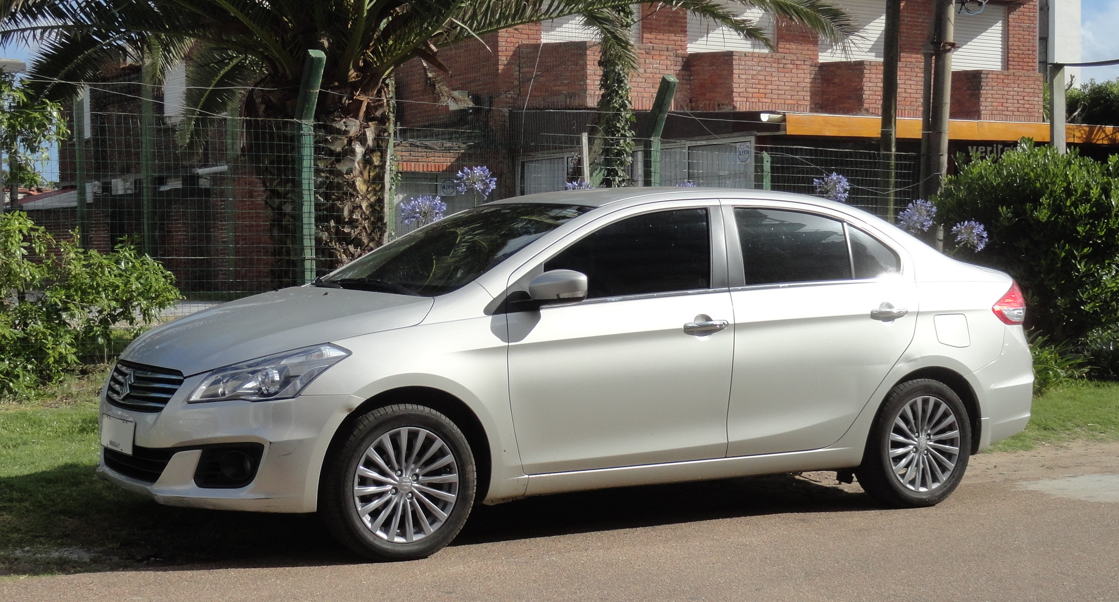
So that your purchase is a smart investment and you don’t end up inheriting someone else’s headaches, we have put together this little “survival guide.” Here are the key points you should review before saying “yes” to a Suzuki Ciaz used:
Litmus test for suspension: Don’t just look at the parked car. Push each corner of the car down to see how the shocks react. The most important thing: during the reconnaissance lap, turn off the radio and air conditioning, lower the windows a little and look for streets with potholes or speed bumps. Open your ears wide in case you detect any metallic knocking or grinding coming from the front wheels.
Check-up of lights and alerts: Before starting the engine, put the key in the “ignition” position (or press the start button without pressing the brake). Check that all the icons on the dashboard light up, and once you start the car, make sure they all turn off. If the Check Engine, ABS or airbag warning light stays on, don’t even think about buying it without first having it professionally scanned.
Clinical history (maintenance): Although the K14B engine is a warrior, it is not immortal; You need your oil changes on time. Ask for service receipts and keep an eye on the bayonet: if the oil looks too black, thick, or smells burnt, it’s a sign of carelessness. Also look under the engine to rule out any suspicious oil stains on the crankcase.
Check brakes and shock absorbers: Pay close attention to the thickness of the pads and make sure the records do not look like a scratched vinyl record. When driving, if you feel the pedal vibrate when you brake, the discs are most likely warped. Regarding the shock absorbers, look for liquid stains on their body; If they are “sweated” or dripping, they are burst and you will have to change them soon.
Conscientious handling: Don’t accept a test of just two blocks. If it is standard, make sure that the speeds enter smoothly (the reverse sometimes gets a little “rebellious”, but the others should flow). If it is automatic, make sure it doesn’t jerk or feel like it “slips” when changing gears. Also take the opportunity to feel if the steering wheel vibrates or if the car pulls to one side.
actual fuel consumption
Consumption is, without a doubt, the letter of presentation of the Ciaz. Although brands often inflate the numbers in their catalogs (promising wonders of more than 20 km/l), the day-to-day reality, told by those who drive it daily, is a little more earthly but equally brilliant:
Moving around the city: Between traffic lights and traffic jams, the normal thing is that you get between 13 and 15 km/l. If you like to have control with the manual transmission, you will notice that it performs a little more than the automatic.
Hitting the road: By staying at a leisurely pace of 100-110 km/h, you can easily see averages of 17 to 19 km/las long as you don’t take the car to the maximum load or ask the engine for miracles.
The actual average: In mixed use (a little of everything), most owners report a few 15 to 16 km/l very healthy. It is, basically, a respite for your wallet from gasoline prices.
Is the Suzuki Ciaz (2016-2020) really trustworthy?
If you are looking for a short answer: Yes, he is a warrior. Although we already saw that it has its details in the suspension or in the finishes, the important thing is that it does not suffer from catastrophic failures in the engine or transmission.
The engine of suzuki It’s “old school” in the best possible way: it’s simple, no weird parts or expensive turbos to break, and it’s built to last. Plus, spare parts aren’t going to cost you an arm and a leg. That is why it is the favorite of both families and transportation app drivers; It is a car that withstands the daily grind without complaining much.
The good and the not so good: Definitive summary
To make it clearer, here is the balance of this sedan:
Points in favor (What you are going to love):
He hardly spends: Its efficiency is one of the best in its category.
Plenty of space: In the back you travel like in a luxury car; There is room to stretch your legs.
Iron mechanics: It is very durable and cheap to maintain.
Huge trunk: It fits everything, ideal for the supermarket or vacations.
Air-conditioning: Suzuki doesn’t play with this; It cools quickly even on the hottest days.
Points against (What you should accept):
It’s missing “cookie”: It feels slow on the road and has trouble making quick passes.
Simple interiors: Plastics scratch easily and the steering wheel wears out quickly.
Lots of noise: At high speed you will hear the wind and the engine quite a bit inside the cabin.
Fair security: The older models (2016-2017) only come with the basics (2 airbags and ABS), falling behind others that offer more protection.
Is it worth buying used?
At the end of the day, is it a good buy? It all depends on what type of driver you are. If you are looking for adrenaline, speed or drag at traffic lights, the Ciaz It will bore you and even frustrate you; He just wasn’t born for it.
But, if what you need is an honest car that takes care of your money, that doesn’t leave you stranded, that is comfortable for your family or for work, the Suzuki Ciaz from 2016 to 2020 It is one of the smartest decisions you can make. It is a car that does not pretend to be something it is not: it gives you space, savings and durability for every peso you pay.
Editorial by Gossipvehicle