

If you walk the streets of our region, you will come across a Chevrolet Sail It is practically inevitable. In corners like Chile, Colombia or Mexico, this model was crowned the king of asphalt for a simple formula: a price that doesn’t hurt the pocket so much, easy-to-get parts and a fairly moderate thirst for fuel. For thousands of drivers, it represented the gateway to their first vehicle or the tireless ally in the journeys of transportation by application.
However, commercial success is not always synonymous with perfection. The truth is that the sail It lives on a very thin line between the affection of its users and constant complaints, generating a fairly marked chiaroscuro relationship.
If the second-hand market is tempting you with one, or if you’re already parking one at home and that mysterious creak is keeping you up at night, you’ve come to the right place. We dive into the real conversations of mechanics, ownership communities and direct reports to break down the problems of the Chevrolet Sail (2018 to 2022 models) that appear in the real world, leaving aside unnecessary technicalities.
1. Most reported mechanical problems

Although the Sail’s 1.5L block has earned a reputation for being a “tank” that withstands daily use, it is not invincible. Upon crossing the 60,000 km barrier, certain vulnerabilities begin to appear that every owner should closely monitor.
The strange metallic “concert” when starting (Chain tensioners)
This is, without a doubt, one of the most debated headaches among those who frequent workshops specialized in this model.
The warning sign: When you start the engine after several hours off, you will notice a metallic clatter—very similar to the sound of maracas—that fades a few seconds after turning it on.
The origin of the problem: The hydraulic tensioner responsible for keeping the chain in place often loses strength or fails prematurely. Ironically, although this car uses a chain (designed to last the life of the engine), this small component is its weakest point.
The solution: Don’t trust yourself. If that noise stops being temporary and becomes permanent, the chain could become loose, skip a tooth and cause an internal disaster in the engine. The ideal is not to skimp and replace the entire distribution kit (guides, chain and tensioner).
Oil consumption and the mystery of the PCV valve
It is not uncommon to hear owners comment that, even though the garage floor is spotless, the oil level mysteriously drops between maintenance.
The culprit: It is almost always the PCV valve (crankcase ventilation system). If it becomes clogged, the internal pressure forces its way out, pushing the oil into the combustion chamber to be burned.
Purchasing advice: When checking a used Sail, go full throttle and see if it comes out. bluish smoke for the exhaust. Another trick is to try to remove the oil cap with the engine running; If you feel excessive suction, the PCV is crying out for change.
Valve cover sweating
It is a fairly common aesthetic and mechanical detail. The original gasket often loses its elasticity soon, causing the engine to look “sweaty” or grease-stained on the top. It is an inexpensive repair, but necessary to maintain the cleanliness of the block.
2. The electric labyrinth and its whims
Although the electronic scheme of the Sail is simple, the durability of certain components is usually the Achilles heel of the most recent versions.
The “Disco Effect” in lights
One of the most typical and annoying errors. You will notice that the dashboard lighting or headlights flash or change intensity as you accelerate or brake.
The cause: He voltage regulator The alternator is on its last legs or the diode plate is not filtering the energy well.
The risk: If you let it go, you will end up buying new batteries every few months and burning out bulbs constantly.
Sensors that turn on the “Check Engine”
The Sail’s dashboard is prone to turning on the alert light by two specific sensors:
Lambda Probe (Oxygen): If it fails, you will notice that the car becomes «gaston» of gasoline and the exhaust gives off a very strong smell of poorly burned fuel.
CKP Sensor (Crankshaft): This one is more critical; If it fails, your car may suddenly shut off in traffic or simply refuse to start even if the engine turns over.
3. Transmission: Rogue gearbox?
If you feel like you’re fighting with the lever, it’s not just you; It is a characteristic of many sail with moderate use.
Hard gears (1st and Reverse): It’s the number one complaint. Sometimes it is solved by adjusting the clutch guide that stretches over time. If the problem persists, it could be the internal synchronizers. Take the test: With the car stationary, put all the gears; Yeah “scrape” or they feel rough, that box needs an overhaul.
Strange hums: If you hear a louder whistle while accelerating, check the valve (transmission oil). These boxes are sensitive and bearing wear appears quickly if the lubricant is old or insufficient.
4. Chassis, Suspension and Safety
The Sail is a car designed for the city, but our Latin American streets quickly take their toll.
The “Clonk” when going over potholes
If each “police lying down” or bump sounds like a thump, the culprits are the connecting rods or the bowls. They are accelerated wear parts on this model due to the softness of its original suspension. On the other hand, the rear part is usually “jumps” by nature; Don’t be scared, that’s the design.
The danger of the low sump
The Sail rides very close to the ground at the front. The crankcase (where the oil lives) is very exposed to stones or deep potholes.
Vital recommendation: If the one you are going to buy does not have crankcase protector (bib)install it on the first day. A hard knock there can empty the engine in seconds and leave you with a very expensive repair.
The elephant in the room: Security
Beyond the mechanics, we must be realistic: the structure of the Sail is light. In security tests (as Latin NCAP)it hasn’t turned out very well. Bodywork experts often say that it is “thin brassware.” It is an excellent car for urban mobility and economy, but it is not designed to be a road car or to withstand strong impacts.
Is it worth buying a used Chevrolet Sail 2018–2022?
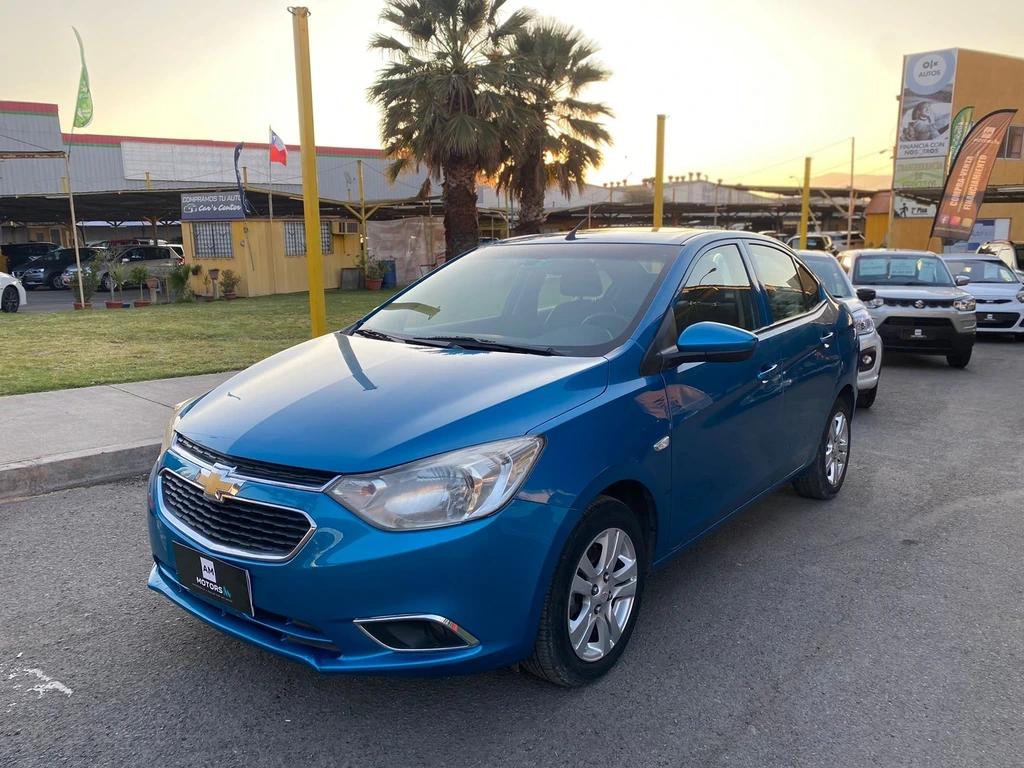
The bottom line: Is it worth the investment?
As a sincere analysis, here I tell you who should say “yes” and who should pass by:
It’s for you if:
You are about to buy your first vehicle and you don’t want to become decapitalized.
You value that spare parts cost little and that any neighborhood workshop can get their hands on it without complications.
You think about the future: it is a car that sells flying when you decide to change it.
Your absolute priority is gasoline saving in the day to day.
Think twice if:
The security of your family is the factor that weighs the most on you (there are more robust rivals for a similar price).
You are looking for a quiet trip: on the highway, exterior and engine noise is filtered a lot.
You are desperate for simple finishes or small noises (“irons”) of internal plastics.
Conclusion
He Chevrolet Sail (2018–2022) It’s an unpretentious car: you get exactly what you’re paying for. It is not intended to be a luxury car or the most armored, but as a mobility tool it is extremely efficient and noble.
The good thing is that their “sins” known problems (alternator, suspension or sensors) can be solved with little money. If you find one that has been for private use, with its maintenance up to date and with the chain issue under control, you will have a riding companion for many more kilometers.
Lightning checklist: What to look at before signing
If you have already seen one of these Chevroletdon’t forget this little field inspection:
The ear does not fail: Ask to turn it on when the engine is completely cold. Sound like maracas for a moment? (Be careful with the chain).
Load test: Turn on the lights, air and radio at the same time. If the light intensity falters, the alternator is warning of its withdrawal.
Busy street: Look for a bumpy road. If you hear clicking noises, be prepared to change connecting rods.
Look at the exhaust: Someone speed it up while you watch behind. Blue smoke is a sign that oil is leaking where it shouldn’t.
Inspection from the ground: Bend down and check the crankcase. If you see dents or scars from dings, that car has suffered bumps.
Editorial by Gossipvehicle