
The debate about the CVT gearboxes has dominated chatter among motoring enthusiasts and experts for the last twenty years. In this scenario, nissan has assumed a leading role, being the brand that has taken the most risks by standardizing this system in a large part of its catalog.
For the average driver in our region, these three letters represent excellent news for the pocket due to gasoline savings, although they also raise some uncertainty about their durability after several years of use. The purpose of these lines is to break down with technical rigor what is true and what is simple exaggeration about these transmissions, giving you the necessary tools to decide if that nissan that you have in mind—whether agency or second-hand—is really a good investment.
Although it may seem new, the idea behind the CVT It has been around for decades, but it was nissan who decided to massify it at the beginning of the new millennium. This transition was not capricious; The Japanese firm desperately sought to align itself with global ecological demands and reduce the environmental impact of its engines.
What makes this mechanism special is that it abandons the traditional sets of fixed gears that we all know (first, second, etc.) to adopt a pulley system that adjusts constantly. Thanks to this, the heart of the car can always be kept in the perfect rhythm, whether you need to accelerate fully or simply cruise while spending the minimum.
However, this technological leap was not a bed of roses. Certain manufacturing periods faced design problems that, over time, affected the company’s image of reliability, especially when we talk about vehicles that already have a considerable history in the used market.
What is a CVT transmission and how does it work?
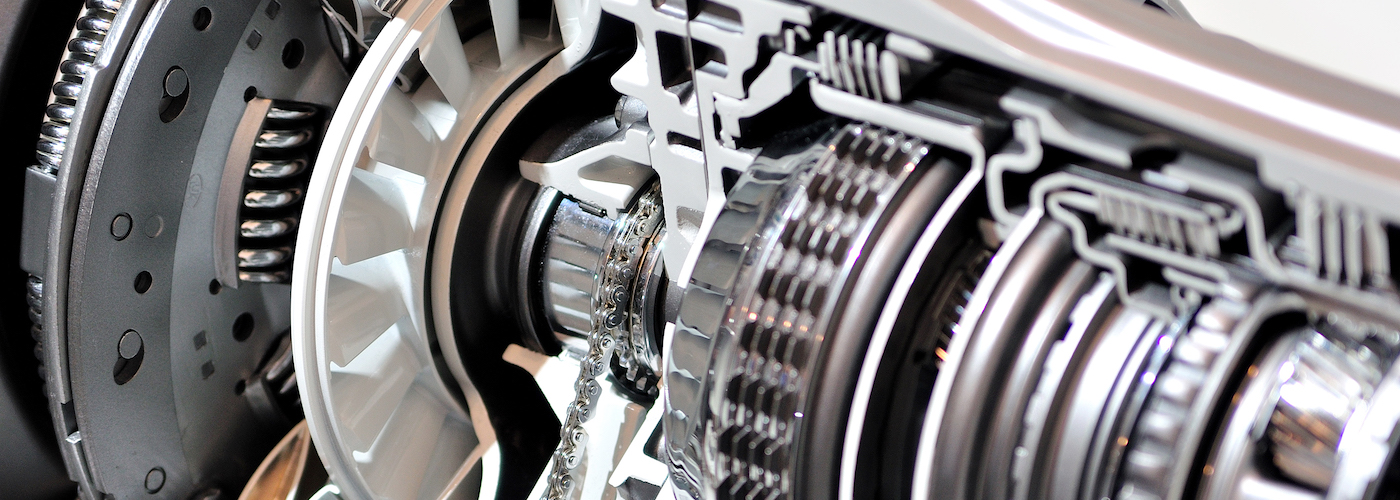
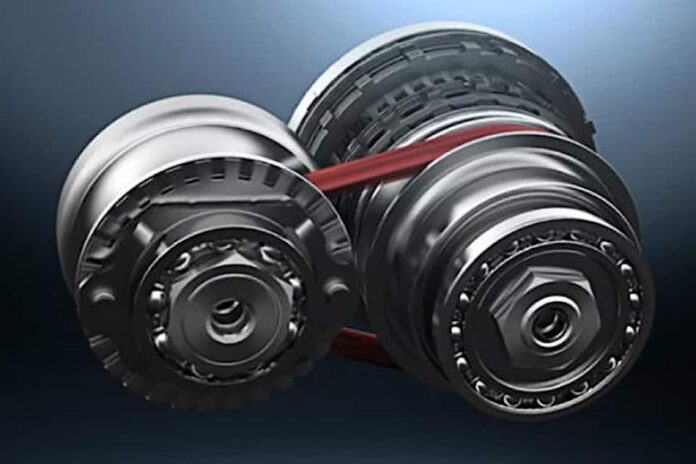
To understand the origin of its breakdowns, it is vital to decipher its internal mechanics. Unlike the usual manual or automatic boxes that “they jump” between pinions, the CVT It relies on an ingenious mechanism of two pulleys that change size, connected by a metal band (or chain in higher power versions).
How does it really work?
Imagine that the pulleys are two cones facing each other. By coming together or separating, they force the belt to move up or down, continuously altering the turning radius. The result is fluid acceleration, without those power cuts that we feel in other cars.
The benefits on paper
Gasoline savings: By eliminating fixed gears, the engine rests at low revs when you are traveling at a stable speed.
Absolute comfort: You forget about the «pulls» or classic jerks when upshifting.
Optimized performance: If you put your foot down, the car digs into its strongest point and stays there while the transmission makes all the adjustment.
Achilles heel: Heat and friction
Here is the technical detail: While traditional gears fit together, the CVT It lives on the friction between the belt and the pulleys. If that grip fails, the band slips. This process generates extreme heat that, if left uncontrolled, prematurely degrades both the special oil and internal parts.
Frequent breakdowns in Nissan CVTs
Here I present the failures that mechanics and owners have pointed out most insistently. You will see that almost all of them have a common origin.
1. Excess temperature
This is the origin of almost all evils. In past models, the cooling system was not sufficient for the heat of our regions or intense traffic, which causes the oil to lose its ability to lubricate.
The feeling: The car feels “loose” and, in critical cases, locks to avoid breaking.
When it happens: Typical in traffic jams, long climbs or long trips in very hot areas.
2. Vibrations and shaking (“Juddering”)
It is perhaps the most common complaint. It feels like you are driving on a rough surface or the car hiccups when starting.
The reason: The faces of the pulleys have worn unevenly or the metal belt is experiencing micro-slips. Since there is not a perfect grip, the system vibrates.
3. The engine “screams” but does not advance
You step on the accelerator, you hear the engine rev hard, but the speedometer barely moves.
The cause: This is usually due to a failure in the electronic management or because the oil pressure is not sufficient to move the pulleys with the necessary speed.
4. Buzzing or rubbing noises
A high-pitched, whistling sound that gets louder with speed is a red alert.
Attention: It usually indicates that the bearings are reaching their end or that the oil pump is under a lot of stress. If it sounds like a turbine, it’s time to go to the shop before the box collapses.
5. Activation of “Emergency Mode”
He car brain (TCM) He notices that heat is dangerous and, to save the transmission, he limits the power.
The experience: Suddenly, the car won’t let you go over 60 or 80 km/h and feels extremely heavy, forcing you to sidestep.
6. Breakage of internal components
In extreme situations, the metal belt can splinter or deeply scratch the pulleys. When the damage is physical and visible in the metal, unfortunately the repair usually involves replacing the entire transmission.
Nissan models with the highest number of CVT failure reports
It is essential to clarify that not all signature transmissions behave in the same way. The bulk of the complications focused on the boxes manufactured by Jatco (Nissan subsidiary) belonging to the first and second stages of development, covering approximately the period of 2008 to 2016.
Nissan Altima (2007 – 2015)
This sedan, especially in its 4-cylinder and 2.5L version, was the center of numerous complaints in the North American and Mexican markets. The combination of body weight and engine thrust often led to CVT to the limit, causing it to get hotter than it should on a regular basis.
Nissan Sentra (2012 – 2017)
The B17 series of this model is remembered for a considerable volume of reports about shakes and total breakdowns long before reaching the 100,000 kilometer threshold. In fact, this forced the brand to expand warranty coverage in various regions.
Nissan Versa and March (2012 – 2018)
Although they are compact and lightweight vehicles, their rough use as work tools in private transportation applications (Uber or Didi) took its toll. The lack of rigorous maintenance under these conditions of urban stress drastically accelerated the end of its useful life.
Nissan X-Trail and Rogue (2008 – 2016)
By being SUVs intended for family use and trips with heavy loads, the demand for thermal stress was constant. It was very common for, after a couple of hours on the highway, the characteristic metallic hum to appear that revealed the exhaustion of the system.
Nissan Pathfinder and Murano (2013 – 2015)
In these heavyweights with V6 engines, the transmission had to manage a force (torque) much more aggressive. In these first batches of large trucks with CVTowners frequently reported a feeling of “chill” or strong vibration when trying to gain speed.
What models or years should be avoided (and why)?
If you have your eye on a second hand nissanthe ideal is to move with caution if the vehicle belongs to the following periods:
Sentra, Tiida (versions with CVT) and Altima (2012 – 2015): These models are located in the eye of the hurricane, since they coincide with the stage in which design errors in refrigeration and failures in software programming were most acute.
Pathfinder (2013 – 2014): This model marked one of the most complicated moments for the firm, when trying to adapt the CVT to engines with a lot of thrust, which resulted in a technical challenge that was difficult to overcome at the time.
What is the real risk of these models?
It is not that every unit manufactured in those years is condemned to scrapping, but the data indicates a much higher tendency to suffer failures in the internal pressure and in the temperature control. The underlying problem is that the factory design lacked an external oil radiator with sufficient capacity to withstand the high temperatures of our cities, which ends up “cooking” the internal components.
Are newer Nissan CVTs better?
The reality is that the brand has learned from its mistakes. Since 2017 and 2018, nissan implemented profound changes in the third stage of its technology (called Xtronic)achieving a significant leap in reliability.
The improvements that made the difference:
Software Intelligence (D-Step Logic): Now the system imitates the behavior of a traditional box, making “changes” that prevent that feeling that the car is skidding and help to better control the force of the engine.
Optimized cooling: Much more powerful oil coolers were installed and antifreeze circulation was improved to keep the box cool.
Less internal friction: The pressure pumps were updated and low viscosity oils began to be used that withstand high temperatures much better.
If you are looking at a Late model Versa or Sentra (2020 to date)you are looking at a vehicle with a drastically lower rate of problems, as long as you are rigorous with its care.
Vital care: How to avoid visits to the workshop
If you have a nissan With this technology, preventive maintenance is your best life insurance. It’s not optional if you want the car to last.
Forget about “eternal” oil: Ignore that idea that the fluid is not changed. In the daily use of our cities, the ideal is to renew it every 40,000 or 60,000 kilometers.
Original oil only: The CVT boxes They are extremely capricious with the chemistry of the lubricant. Using a generic one, even if it promises to be compatible, is usually the death knell of the transmission. Use exclusively Nissan NS-2 or NS-3according to what your manual dictates.
Attention to filters: These units usually have a cartridge filter on the outside and a mesh on the inside. It is vital to inspect or replace them each time the box is serviced.
Handle gently: Avoid violent accelerations from the traffic lights and, above all, make sure the car is completely stopped before moving the lever between Drive and Reverse.
Conclusion
There is no need to see the Nissan CVT as a total technical error, but as a technology that went through a rather bumpy stage of maturation, both for the manufacturer and for the customers. Today, these units provide extremely smooth driving and fuel savings that older 4 or 5-speed automatic transmissions simply cannot achieve.
Closing tip
If you intend to purchase a nissan With this transmission on the used market, it is essential that you order the maintenance record from the box. If the previous owner never replaced the oil and the odometer already reads more than 100,000 kmit is best to think twice or be extremely cautious. On the other hand, if the car has been properly cared for and belongs to the newer generations, it represents one of the best options in terms of balance between price and benefit.
Editorial by Gossipvehicle