Walking through the door of a dealership in our country is usually a parade of distractions: the sales advisor boasts about the shine of the paint, the size of the central screen or how comfortable the panoramic roof is. They surround you with promises of fixed installments and full connectivity with your phone. However, there is an elephant in the room that almost no one wants to have a say in: the accident prevention team. It is precisely at that point where we hit one of the deepest potholes in the automotive sector today.
We are in 2026 and, although innovation flies, an important part of the vehicles that circulate on our avenues seem stuck in the previous decade. If you are curious to know which cars lack collision braking assistance, you are going to be in for a bitter pill when you discover that the list is extensive and covers, precisely, the best-selling models loved by Mexican homes.
To measure the risk that this deficiency implies on our roads, it is vital to explain what is behind the concept of AEB braking and what is its protective role. This acronym refers to the Autonomous Emergency Brakingeither Autonomous Emergency Brakinga technology that goes far beyond a simple “extra”.
Forget thinking that it’s just a warning beep; We are talking about a digital co-pilot capable of making decisions in milliseconds. It is a proactive safety mechanism designed to stop the car completely before a head-on collision or, if physics does not allow braking in time, reduce the violence of the impact to a minimum to save lives.
How does the magic behind AEB work?
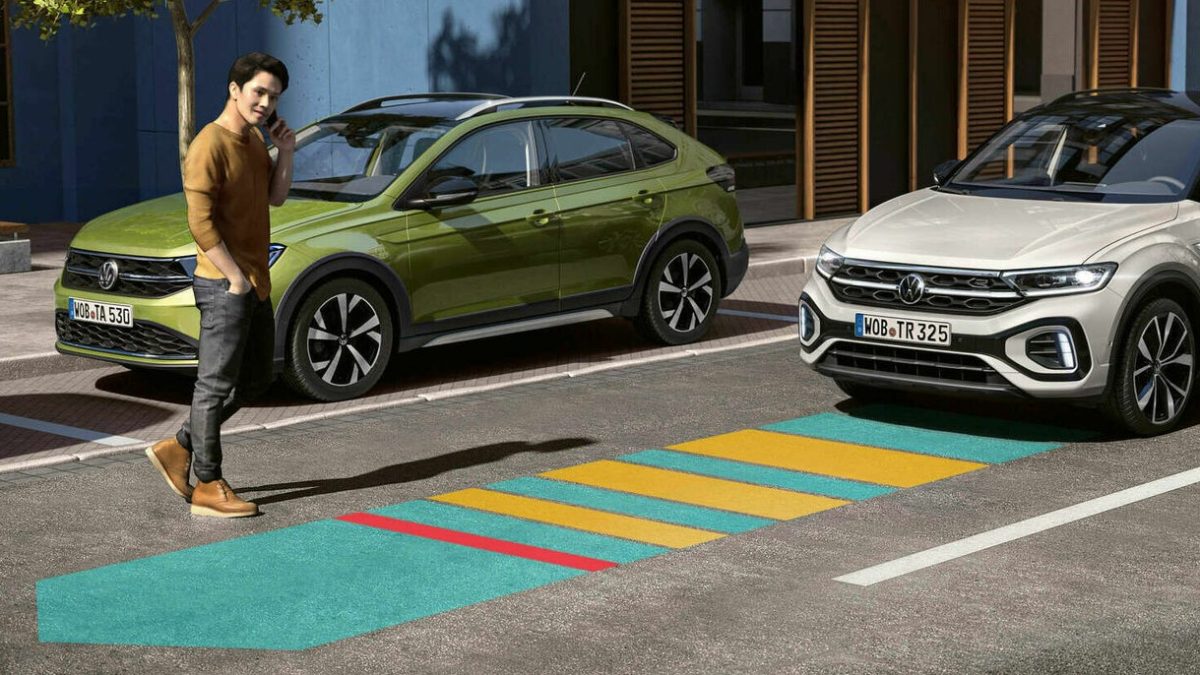
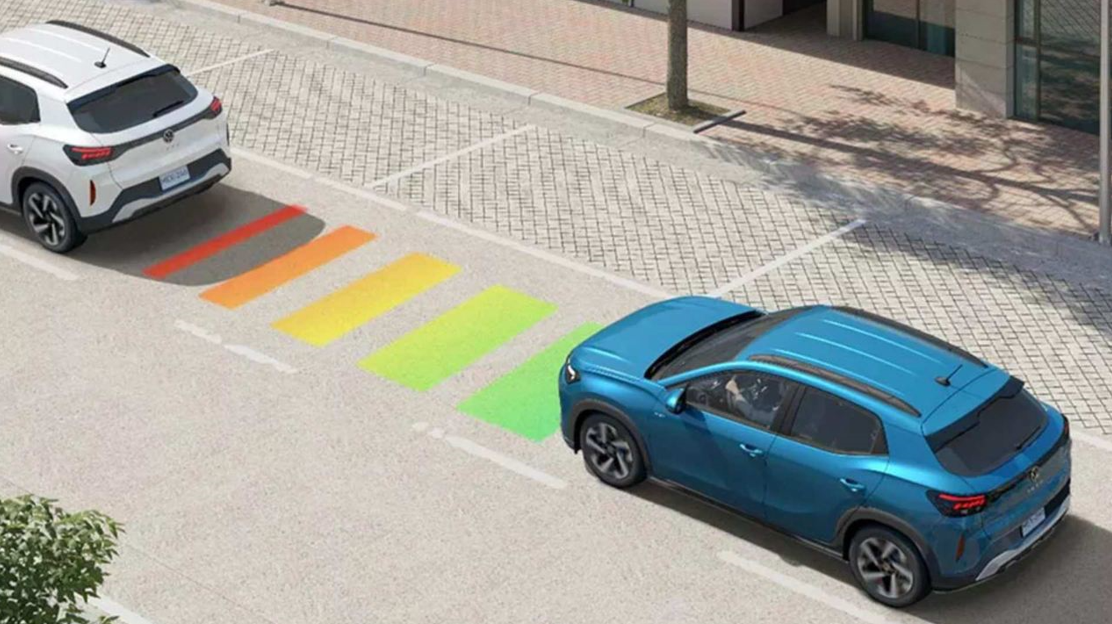
The system is a mix of military technology and high-precision photography: it uses radars hidden in the grille and smart cameras behind the rearview mirror. These digital eyes scan the road tirelessly, watching for cars, people and even cyclists.
Everything happens in the blink of an eye, divided into three life-or-death moments:
Immediate notice: If the car in front hits the brakes or someone cuts you off, the system notices that the distance disappears while you continue accelerating. Before acting, it sends you a visual alert and a warning sound on the dashboard for you to react.
Brake preparation: If you ignore the warning, the car “preloads” the brake pads. It brings them closer to the discs so that, as soon as you touch the pedal, the braking is brutally efficient and without delays.
Emergency braking: If a crash is imminent and you do nothing (due to carelessness, fatigue or lack of reflexes), the vehicle takes control and applies the brakes fully on its own.
The difference between a scare and a tragedy
Imagine that you are on a fast road like the Periférico during rush hour. You are traveling at 60 km/h and suddenly the traffic stops dead. At that precise second, you turned to look at the mirror or change the song. At that speed, your car moves 16 meters every second. Without this technology, the impact is certain. With it, the car stops before you even understand what happened. It’s the gap between coming home with a racing heart or ending up in an emergency room or dealing with the adjuster.
The blacklist: Models that leave you “unprotected” in Mexico (2026)
We enter difficult terrain. When analyzing the safety of best-selling cars, we discovered a questionable marketing tactic: brands save automatic braking only for their luxury versions, leaving the most affordable versions—the ones most people buy—without this vital protection.
Entry cars (Subcompact)
They are the cheapest, ideal for students or fleets, but here the cost cutting is aggressive:
Chevrolet Aveo: Although it already includes 6 airbags, it still blindly trusts the driver’s reflexes; No version brakes alone.
Nissan March: A classic, but its platform is so old that it does not support these modern supports. Zero AEB throughout the range.
Renault Kwid: The “compact SUV” complies with the law, but its preventive technology is null, something that weighs heavily on international security.
Hyundai Grand i10: Very efficient in gasoline, but very basic in active protection. It does not offer automatic braking in any of its variants.
Family sedans (Market favorites)
Here the story is one of “pay more for your security”:
Nissan Versa (Base versions): Nissan improved a lot, but in the entry-level versions for fleets or models from previous years that are still sold, the system is usually conspicuous by its absence.
VW Virtus (Trendline and Comfortline): A great car to drive, but if you don’t buy the most expensive version (Highline), you are left without advanced assistance.
Kia K3 (L and LX Versions): The Rio’s successor is modern, but maintains the old custom: if you want the car to avoid crashes, you have to upgrade to the more expensive versions.
MG5: It is huge on the outside and cheap, but it has failed in international safety tests precisely because it lacks this system.
SUVs (Compact Pickup Trucks)
You pay for status and height, but not always for more technology:
Nissan Kicks (Advance): The basic version gives you the truck aesthetic, but removes the front emergency sensors.
Chevrolet Tracker and Groove: The groove it does not offer it at any level; the tracker It jealously saves it only for the Premier version (the most expensive).
Suzuki Jimny/Swift: Fun and reliable cars, but suzuki In Mexico it has lagged behind in including its dual brake system in the higher volume versions.
Expert tip: Brands change their versions without warning. Don’t trust advertising; Ask for the actual technical data sheet of the car in front of you and look for terms like “Intelligent Braking”, “City Safety” or “Forward Collision Assist”.
Why is Mexico still forgotten about security?
If he AEB saves lives, why is it not standard in 2026? The answer hurts, but it is purely economic:
Savings at the user’s expense: Putting cameras and radars is difficult. To maintain a “hook” price below $350,000 MXN, brands prefer to remove the security radar before removing the touch screen, because they know that the brightness of the dashboard sells more than invisible security. It’s a double standard: they manufacture cars in Mexico with all the technology to export them to the US, but they sell us the “austere” version.
Laws that do not require: Our current standard (NOM-194) has improved, but it is still light years from what is required in other countries. As long as the government does not force brands to include the AEBthey will continue to sell it as a luxury and not as a right.
The “Up-selling” trap: Agencies use your security to get you to spend more. They hook you with a low price and then tell you: “If you don’t want to crash, pay $60,000 more for the version that brakes on its own.”
The contrast that outrages
In the US and Europe: It is mandatory. Almost 100% of new cars, from the cheapest, brake on their own. It’s the law.
In Mexico: The AEB is a “privilege” of the top-of-the-range versions. Here, your security depends directly on how fat your wallet is.
Is it worth sacrificing your security? Buy cars without AEB Mexico
Let’s be realistic. We all dream of the safest car on the market, but inflation and interest rates in Mexico during 2026 are through the roof. This forces us to put our cards on the table.
Does it make sense to take a car without this technology?
The “good” thing about doing without AEB:
Immediate savings: You get rid of an extra cost of between $40,000 and $80,000 pesos by opting for the basic version.
Simpler repairs: In a minor city crash, you won’t have to replace the expensive grille sensor, which usually costs a small fortune.
Full control: For “old school” drivers, not having alerts beeping in the chaos of CDMX, Monterrey or Guadalajara is a relief from systems that can sometimes be somewhat intrusive.
The “bad” (and dangerous) thing about not having it:
The human factor: We are fallible. A blink or a second watching the waze It is enough to destroy your car and cause serious neck injuries to others.
Expenses you don’t see coming: What you “saved” at the agency you could pay three times as much in deductibles, hospitals, loss of value of the car after the crash or even legal problems.
Commercial expiration: By 2030, selling a car without automatic braking will be as difficult as trying to sell one without airbags today. Its resale value will plummet.
The golden rule: If your budget is on the limit, make sure it has at least 6 airbags, stability control (ESC) and a solid structure endorsed by Latin NCAP. But, if you are hesitating between spending that extra on luxury wheels and a panoramic roof or upgrading to the version with autonomous braking, always choose safety. That system pays for itself the first time it keeps you from crashing.
Survival guide before signing at the agency
Don’t let the smell of a new car and complimentary coffee cloud your judgment. You are about to make one of the heaviest financial decisions of the year, so follow these steps:
Ask for the technical sheet, not the catalogue: The brochures always show the most equipped model. Demand the actual spec sheet for the version you are purchasing.
Master the “language” of brands: Not everyone calls it AEB. look it up as toyota Safety Sense, Sling Sensing, nissan Intelligent Mobility either Front Assist in Volkswagen.
Don’t trade security for “screens”: A 12-inch screen does not stop two tons of metal at 80 km/h. A radar yes.
Consult the experts: Before releasing the hitch, check your model’s rating on Latin NCAP. If it has zero or one star, run away from there no matter how “cheap” it looks.
Look at the pre-owned market: Sometimes it is much smarter to buy a Mazda 3a Jetta or a civic It’s been a couple of years since it already brought these assistances, instead of launching a basic and “bare” 2026 model car.
Conclusion
The road safety scenario in Mexico in 2026 leaves us a stark lesson: brands are not your protectors and our current laws are not designed to demand the highest level of care from you. At the end of the day, the responsibility of protecting your life and the lives of your loved ones rests solely with your firm when closing the deal.
Understanding which models lack automatic braking and why these cars remain top sellers is the first step to being a smart buyer. Don’t let them sell you fifteen-year-old technology at 2026 prices. Your integrity is worth much more than the profit margin of any manufacturer.
Editorial by Gossipvehicle