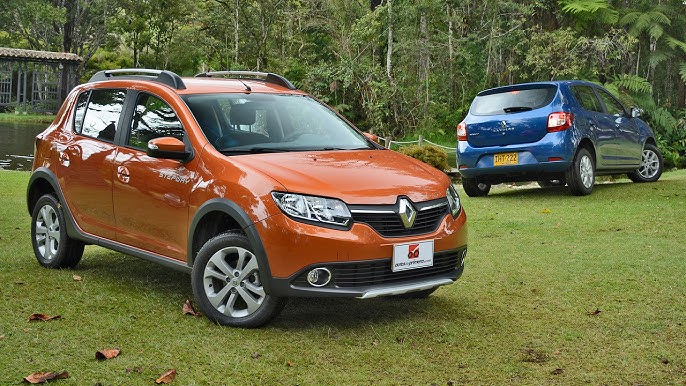
Purchasing a second-hand vehicle is an exercise in balancing what your wallet dictates and the urgency of not being left stranded on the road. In the automotive scene of Mexico, the Renault Sandero The first batch (2009–2016) managed to stand out as a solid and generously sized alternative for those looking for a utilitarian car without spending a fortune.
Born under the seal of Dacia — the low-cost division of renault — and mounted on the structure B0this model landed on Mexican soil with the promise of being a practical ally, whether as the first approach to driving or as a tireless work tool for daily traffic. However, the passage of time and the kilometers traveled on our pavement have revealed mechanical and maintenance peculiarities that any interested party should put under a magnifying glass before closing the deal.
Common faults of the Renault Sandero (2009–2016)
Taking as reference the diagnoses from expert workshops and the experiences of those who have driven this car in Mexico, here I detail the “sins” most common of the Sandero when it is already several years old:
1. Distribution system and water pump
More than a factory defect, it is the Achilles heel of maintenance. In the 1.6L 16-valve block, if the belt bursts, the engine is practically unusable.
Warning signs: Strange squeaks near the pulleys or, in the most drastic scenario, the engine suddenly shuts off and no longer starts.
What to inspect: Check with invoices that the change has been made every 60,000 km or every 4 years.
Spent: It is a reasonable preventive investment; Skipping it will force you to pay for a total engine rebuild.
2. Ignition coils
A recurring headache for the brand during that decade. Factory parts usually give up under high temperatures or excess humidity.
Warning signs: The car “vibrates” more than normal, the idle is unstable and you feel that the car is having a hard time gaining speed.
What to inspect: Make sure the dashboard does not have the Check Engine on and that the thrust is constant.
Spent: A cheap and quick fix to solve.
3. Steering leaks and suspension fatigue
The state of the streets in places like CDMX or Puebla is unforgiving. It is common to see hydraulic oil loss through the rack retainers. Also, bushings and shock absorbers are usually delivered early.
Warning signs: Metallic knocks when crossing bumps or steering that feels stiff and noisy when maneuvering.
What to inspect: Look for oil stains on the floor and check that the suspension rubbers are not dry or broken.
Spent: Moderate. Wear parts are accessible, but repairing the steering box does hit the wallet a little harder.
4. Electrical details (windows and sensors)
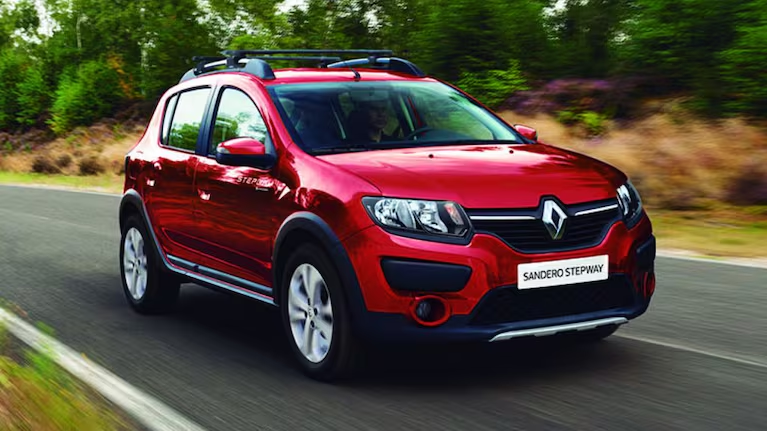
In the most complete variants, such as Stepway or the Dynamiqueelectrical accessories tend to cause war after a while.
Warning signs: Windows that roll up at a snail’s pace or get stuck, and parking sensors that die out of nowhere.
What to inspect: Press each button and test all electrical functions before saying “yes.”
Spent: Low; It is usually resolved by cleaning terminals or repairing loose wires.
Engines that you will find in the Mexican market
The Sandero was mainly powered by two very honest mechanical hearts:
1.6L 16 valve (K4M): The most balanced option. It delivers about 105 hp and its reputation for robustness is well earned, as long as you don’t neglect its distribution band.
1.6L 8-valve (K7M): The “battle” engine of the basic versions. It is noisier and lazier, but it withstands abuse like few others and its parts are extremely cheap.
Verdict: If you are looking for more agile handling and slightly more optimized fuel consumption, the 16 valve engine It is, without a doubt, the best purchase.
Weak points compared to the competition
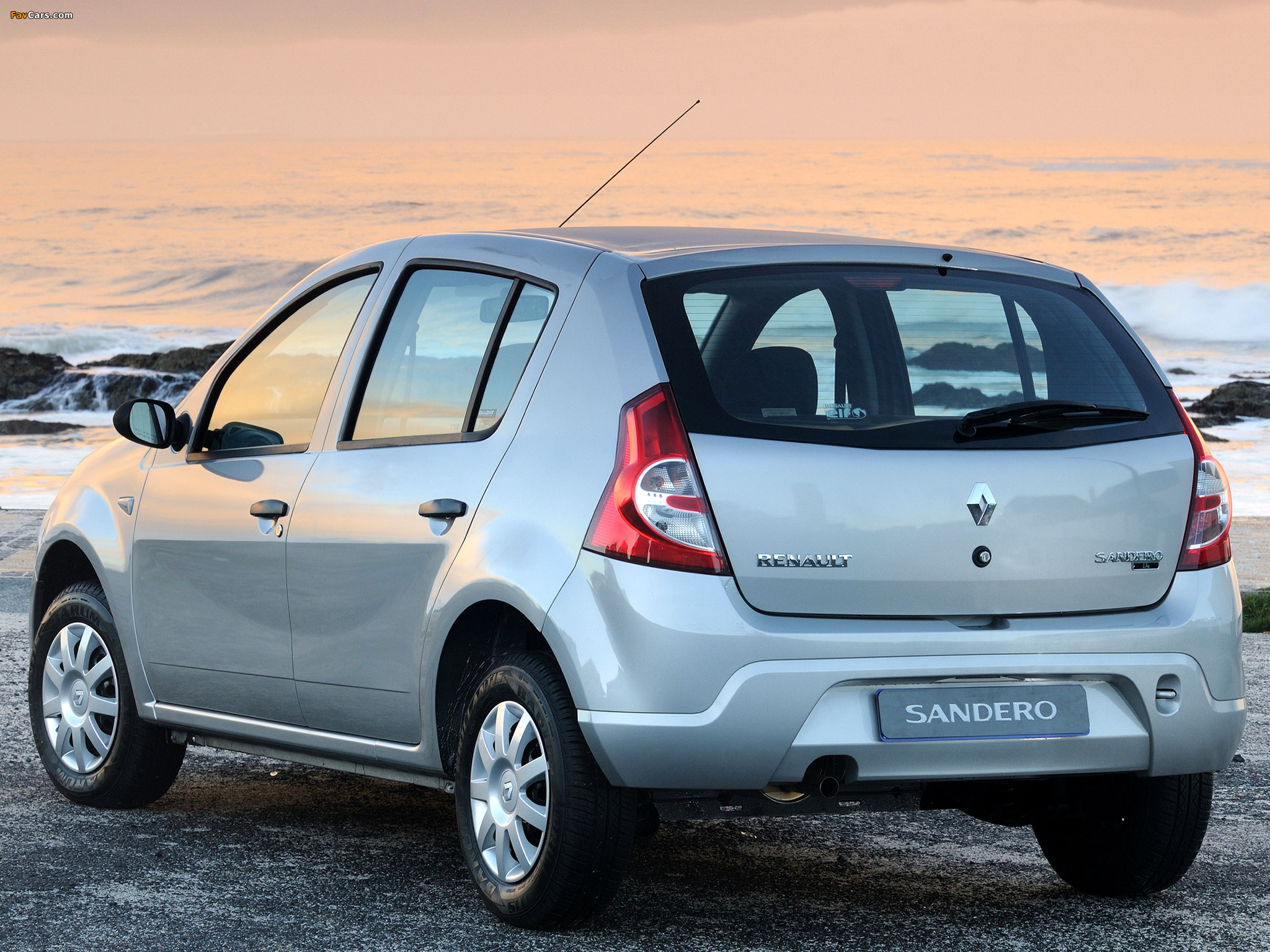
Despite being a decent car, the Sandero It does not hide its economic nature in certain sections where simplicity takes its toll:
Internal finishes: The presence of hard plastics is the norm throughout the cabin. As the kilometers go by, it is almost inevitable that those annoying noises and vibrations (the typical “crickets”) appear due to the misalignment of the parts.
Soundproofing: Isolation is not his strong suit. When hitting the road and exceeding 100 km/h, you will notice that both the roar of the engine and the sound of the wind sneak into the cabin more than desired.
Safety equipment: In units between 2009 and 2012, the entry variants came quite “naked”, without ABS brakes or airbags. In this sense, it was one step below more robust competitors such as the Honda Fit or the Toyota Yaris of those years.
Gasoline expense: Don’t expect him to be the king of savings. In real traffic conditions in the city, its performance is usually between 10 and 11 km/l, a somewhat discreet figure for its segment.
What to check before buying: Practical checklist
If you already have a car in your sights to go see it, take note of these points that will tell you the truth about its condition:
Test drive: Keep the stereo off. Silence is your best ally to detect creaks or bumps in the suspension when you go over potholes or cobblestone roads.
Antifreeze color: Open the tank (always cold). If the liquid looks like chocolate or has a sludgy texture, discard it immediately; that screams that the cooling system has been completely ignored.
Clutch feel: If when you press the pedal it feels as rigid as a stone or if the engine revs but the car does not move strongly on slopes, the kit clutch He already gave what he had to give.
Tire tread: Check that the wear on the front tires is even. If they are more worn on one side, it is a sign that you need an alignment or, worse yet, that some suspension component is crooked.
Is it worth buying a Renault Sandero 2009–2016 today?
Who is this car really for?
It is an excellent purchase if: Your priority is space. If you need the rear passengers to travel comfortably (much more than in a March or a Spark), you require a good-sized trunk and you are looking for noble mechanics that any corner shop can repair without the need for special tools or very expensive scanners. It is the ideal vehicle for college students or young couples who take care of every penny.
Better look for another alternative if: You are desperate for simple interiors and clanking plastics, if you are not willing to sacrifice modern safety assistance or if your lifestyle involves devouring kilometers on the highway at happy paces, where noise and stability may not meet your expectations.
Conclusion
Ultimately, the Renault Sandero of this generation is a transparent car: it does not try to pretend to have luxuries that it does not have, but instead focuses on fulfilling its mission of transporting you economically and without complications. If you find a unit that has been well treated and has its services on time (with changing bands as an absolute priority), you will have a very faithful battle companion to deal with the traffic and streets of Mexico.
Editorial by Gossipvehicle