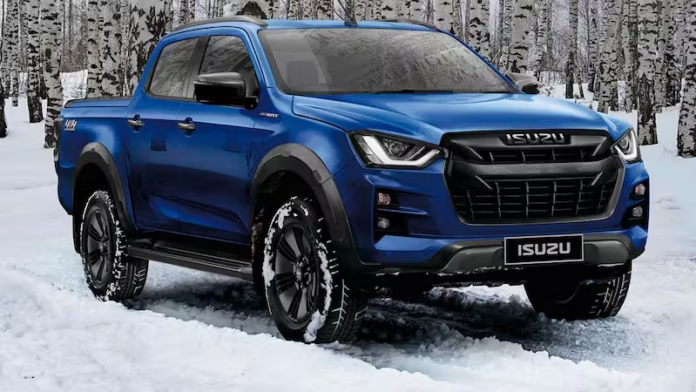
The Chevrolet D-Max (which in other latitudes is identified as Isuzu D-Max) has established itself as the queen of the routes in Latin America, making a strong presence in countries such as Chile, Colombia and Ecuador. His reputation for being a machine “eternal” It is not a coincidence; It comes backed by its Japanese heritage and an industrial diesel heart. But let’s be real: mechanical perfection does not exist, and this truck drags certain “sins” recurring problems that any interested party should put under the magnifying glass.
What is the importance of doing your homework before shelling out the money? Simple: although the core of the engine is capable of withstanding almost any punishment, its external components (such as emissions management, injectors and the electrical part) are the ones that usually cause headaches, especially in specimens that come from heavy work in mines or forests.
This review focuses on the variants equipped with the 2.5L (4JK1) and 3.0L (4JJ1) blocks that came on the market between 2017 and 2023.
The essentials: typical faults of the Chevrolet D-Max (2017–2023)
If you’re short on time, these are the red flags that require close inspection. Ignoring these signs could end up with a pretty painful shop bill.
DPF (Particulate Filter) Clogging: A common headache if you only use it in the city or for short trips.
Oil level increase: A strange phenomenon where the lubricant becomes contaminated with fuel, derived from failed regenerations of the DPF.
Cracks in the internal fenders: A structural defect that appears in the engine compartment after subjecting the pick-up to very rugged terrain.
Injection problems (Seals and nozzles): The culprits when the exhaust emits white smoke or when you feel like the truck is not “strip” as it should.
Buzzing in the rear axle: A metallic whistle that occurs when going fast, common in trucks with a lot of travel.
Address Security Alert (2021-2022): An official recall due to a steering shaft bolt that was not tightened correctly on the assembly line.
Most frequent mechanical failures (Deep analysis)

1. The DPF and oil contamination dilemma
This is, without a doubt, the Achilles heel of the Euro 5 versions launched since 2017. The gas treatment scheme is extremely delicate.
The conflict: If the vehicle does not heat up enough (typical on short city trips), the heating cycle “self-cleaning” of the filter is cut in half. The system tries to compensate by injecting extra fuel, but since it is not burned, this diesel ends up leaking into the crankcase, where it mixes with the lubricant.
Warning signs: You will see the DPF icon illuminated on the instrument panel, you will notice that the truck enters “protection mode” (it loses power and does not accelerate) and, most critically: when measuring the oil, you will notice that the mark exceeds the maximum limit and gives off a strong aroma of fuel.
When to expect this: It can show its face from 40,000 km if the use is merely urban.
Danger: Criticism. an oil “watery” The diesel does not protect the internal components, which can cause the engine to be scratched or completely melted.
Workshop invoice: Between moderate and high. It involves performing an electronic cleaning using a scanner, replacing the oil immediately or subjecting the filter to a chemical bath.
2. Structural cracks in the inner wheel arches
An architectural failure that comes from the base Isuzu and that usually goes unnoticed until it is evident.
The conflict: In trucks subjected to constant vibrations (such as gravel roads or “saw”) or that carry large batteries without adequate anchoring, the metal in the engine compartment gives way due to fatigue, cracking the sheets near the fuses or the battery.
Warning signs: Metallic creaks when going over potholes. They are easily detected with a good flashlight, looking for cracks in the sheet metal behind the engine components.
When to expect this: It does not depend on the kilometers, but on the abuse. It is a “scar” classic in units that worked in mining operations.
Danger: Average. It does not stop the movement, but it compromises the rigidity of the body if it is not attended to in time.
Workshop invoice: Moderate. It requires technical welding work and, preferably, adding steel reinforcements.
3. Wear on injector seals (copper washers)
Although the 3.0L block (4JJ1) is legendary for its robustness, its seals require constant monitoring.
The conflict: The copper discs that seal the joint between the injector and the cylinder head become charred or eroded. This causes combustion pressure to leak upward, contaminating the lubrication system with burned residue.
Warning signs: Presence of whitish smoke when starting the engine, a rhythmic knocking (like a blow) and the formation of a thick black crust on the crankcase that ends up clogging the oil pump.
When to expect this: It is common for it to occur at the threshold of 80,000 to 120,000 km.
Danger: Extreme. If dirt blocks the flow of oil, the engine runs out of lubrication and becomes unusable in a matter of seconds.
Workshop invoice: Economical if it is preventive; astronomical if the engine collapses. Changing gaskets is a minimal investment compared to a total rebuild.
Electrical failures and preventive campaigns
Security alert (Recall) in the direction 2021-2022 If you are after a semi-new unit, this is non-negotiable. In several countries in the region, a technical campaign was activated for models manufactured between 2021 and 2022.
The defect: A screw on the lower shaft of the steering column left the factory insufficiently tightened, creating the risk of it coming loose and losing control of the vehicle.
To do: It is essential to check with the chassis number (VIN) at an official service if that unit has already received the free correction.
“Smart” Alternator Management The D-Max employs a variable charging system designed to optimize fuel consumption.
The conflict: The voltage fluctuates constantly. If you installed extra accessories (LED bars, sound equipment or winches) connected directly to the battery, you could suffer unexpected discharges or damage the useful life of the battery.
Suggestion: For those who equip the truck for adventure, the ideal is to mount a battery isolator or a DC-DC charger that stabilizes the current for the accessories.
Transmission and clutch behavior
Automatic Transmission (6-speed Aisin) It is a reliable transmission, but its weak point is excessive heat.
The conflict: Under high-stress conditions, such as towing a trailer or climbing long hills with a full load, the box may overheat and limit its operation. Some drivers notice a sensation of «patinated» into the torque converter before it fully engages.
Suggestion: If your plan is to use it for heavy duty or constant towing, adding an external oil cooler is the best investment to protect the life of the box.
Manual gearbox and clutch kit * The conflict: The original disc usually has a shorter life than usual if a lot of torque is required from inclined starts. It is common to feel a vibration or “jerks” when leaving first gear when the truck reaches around 60,000 km.
Curiosity: It is very common for the clutch pedal to start making an annoying metallic squeak, something that is usually solved by simply lubricating the pivot point.
Front axle, brakes and ride comfort
Rear suspension hardness: More than a fault, it is its factory configuration. It is designed to support a thousand kilos; Therefore, if you travel without a load, the rear tends to be very bouncy and uncomfortable.
Suggestion: The community usually replaces the stock shock absorbers with higher quality ones or install type twins (shackles). “comfort” to soften the response of the crossbows.
Squeaks in the elastics: The rear leaf spring bushings tend to dry out prematurely, causing a loud noise. “old cart.” Normally, it is a lack of adequate grease or poor quality of the original rubber.
Warped brake discs: Because the rear axle uses drums, the front discs take almost all of the effort. If the brake is abused on long descents without relying on engine compression, the discs overheat and warp, causing vibrations in the steering wheel when braking.
Is the used Chevrolet D-Max reliable?
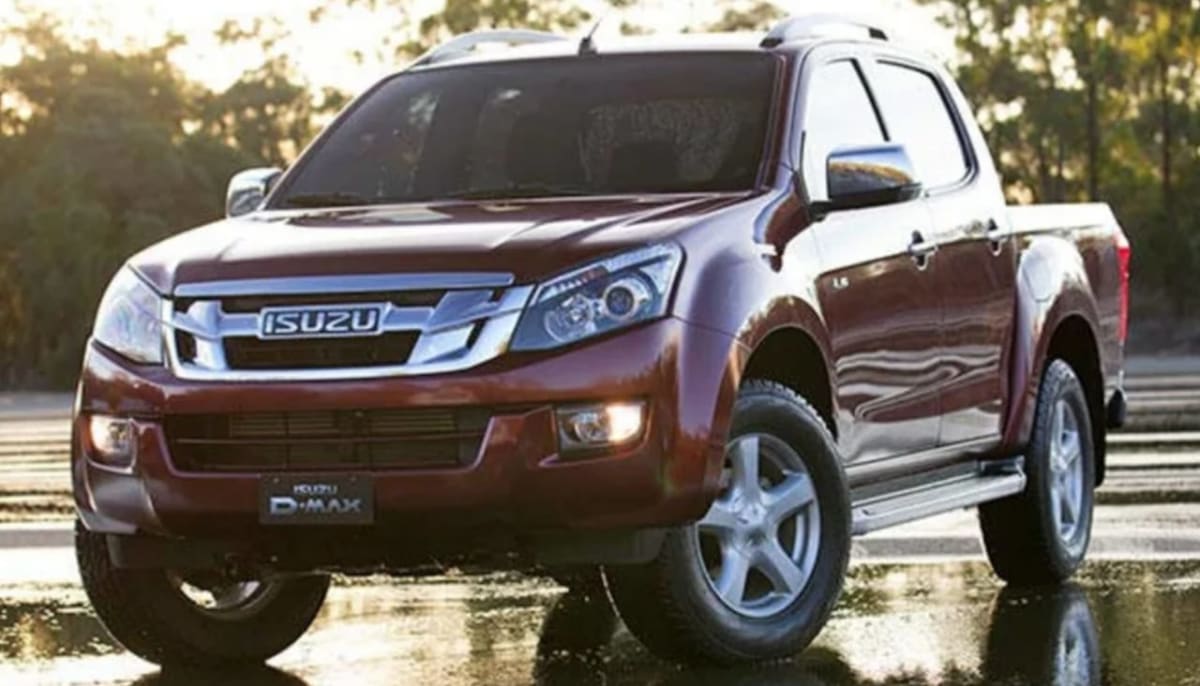
The D-Max It’s a rock, but it requires a committed owner. Unlike the gasoline pickups of yesteryear, a modern version (2017-2023) does not forgive the use of mediocre lubricants or poor quality fuel. It’s a work vehicle that will return every penny in durability, as long as you respect its maintenance rules.
The best (Pros): The 3.0 engine (4JJ1) is a true mechanical legend in terms of its internal components (reinforced pistons and robust distribution chain). Furthermore, you have the peace of mind that you will find spare parts even in the most remote corner of Latin America and, when you decide to sell it, its value on the used market remains very firm.
The least good (Cons): The DPF system is capricious if you only use it to go to the supermarket. In terms of comfort, it feels more “brute” and rigid than a Nissan Navara or a VW Amarok. Furthermore, if you are looking for technological luxuries, the interior of the entry versions will seem somewhat basic or austere.
What to check before buying a Chevrolet D-Max (2017–2023)
If you are going to see a D-Max Tomorrow, don’t forget to go through these 4 points:
The rod test: With the engine off and cold, remove the oil dipstick. If the level exceeds the maximum or there is a smell of diesel, the DPF is causing problems.
The look under the hood: Remove the plastic engine cover and look for traces of “marshmallow” black or charcoal near the base of the injectors.
Flashlight inspection: Check the inside sides of the engine (near the battery). If you see fresh welds or cracks in the paint, it’s had a tough life off-road.
Braking test: In a safe area, brake firmly at about 60 km/h. If the steering wheel vibrates, be prepared to change or grind discs.
Final conclusion
The Chevrolet D-Max It is, above all, the ultimate battle companion. If your priority is a pick-up that is not afraid of mud, that devours kilometers without complaining and that endures the harshest treatment, you are looking at one of the best candidates on the market. In terms of good sense and resistance, she is the only one who dares to look into the eyes of the Toyota Hilux without blinking.
Is it for you? It is the ideal choice if your life takes place outside the urban asphalt, if you need a workhorse for heavy work or if you are one of those who cross the country from end to end by road.
When should you avoid it? If your routine is 100% city-dwelling, limited to shopping or taking the kids to school, this truck is not for you. In this environment, the system DPF It will turn into a nightmare of dashboard warnings and visits to the shop.
The golden advice: If you already have your eye on one of these Chevrolet, try to make it the version 3.0L. Make sure he has his resume stamped at the dealership and, as a sacred rule, replace the injector washers preventively every 40,000 km. With that little care, you will have a motor for life.
Editorial by Gossipvehicle