
If you are looking at a brand new car in 2026, it is a fact that you are going to come across a term that appears even in the soup: the acronym CVT.
For a large part of the drivers in our region, reading those three letters usually awakens a feeling between distrust and the desire to run away. It is no wonder; Just ten years ago, choosing a vehicle with this technology felt like playing Russian roulette. The transmission nightmares that “they died” Before reaching 60,000 kilometers, they became the obligatory talk in any workshop or group of enthusiasts from end to end of the continent.
However, the world of engines does not stand still and things have changed. The real question we must ask ourselves today is not whether these boxes work, but something more direct: Have they been polished enough to make it worth dropping your life savings for one in 2026?
In the following lines we are going to uncover the truth, reviewing how much it hurts your pocket when repairing them and what those who really get their hands dirty with them say, so that you know if it is better for you to get into that car or better to look elsewhere.
What exactly is a CVT transmission?
To be clear if this system fits what you are looking for, the first thing is to take the mystery out of what you have under the hood. CVT are the acronyms of Continuously Variable Transmission (Continuously Variable Transmission). While a traditional automatic transmission depends on physical gears that jump one by one (first, second, third…), the CVT It moves—so that we understand quickly—by a set of two conical pulleys joined by a metal belt or chain.
Think about how the gears on a mountain bike work, but without those sudden jumps between sprockets. Here, the pulleys open and close constantly to give you the exact force you need at all times, without having to “put” a real gear change.
The theory says: That the engine always works in its comfort zone, spending as little as possible.
What you feel behind the wheel: A constant and gentle push, without pulling, although it usually comes with that effect “elastic” (you hear the engine rev a lot, but the car gains speed at its own pace).
Real Advantages: Why do brands insist on using them?
Do not think that manufacturers put these CVT boxes just to save a few pesos or for pure pleasure; The reality is that they offer very clear advantages that end up convincing anyone:
A break for your wallet: If you are looking to squeeze out every drop of fuel, there is no doubt that this is the winning option, especially in small engines (2.5 liters and below). In the chaos of daily traffic, a modern CVT and properly adjusted it can give you between 10% and 15% more performance compared to those old automatics that spend so much.
Zero pull, pure silk: Since there are no real gear changes here, you forget about those «pushes» or dry kicks when accelerating. If you have to deal with the endless traffic jams in our cities, you will appreciate that feeling of fluidity and comfort that other transmissions simply do not have.
Constant push on slopes: When you have to climb a steep slope, the CVT She is an incredible ally. Instead of being “hesitating” between gears or losing power while deciding which gear to put in, the box finds the exact point for the car to climb decisively, something that is very appreciated if you live in mountain areas.
Disadvantages and Common Problems of CVT Transmission
This is where things get crazy. Although by 2026 technology has taken giant steps, the “sins” of a CVT are still another matter compared to the usual boxes.
1. That feeling of being “in band” or disconnected
Many drivers find it frustrating to put down the pedal and hear the engine roar at full speed while the car barely takes flight little by little. It’s not that anything is broken, it’s just how they work, but that lack of immediate response takes all the excitement and flavor out of driving.
2. Heat: that enemy that does not warn
This is the Achilles heel, especially in our Latin lands. The CVT are “slaves” of the temperature and quality of your oil. If you push it harder—whether on steep slopes, high heat, or driving the car at full speed—the fluid degrades in the blink of an eye. If the box gets too hot, the car will “protects” and suddenly loses strength so as not to end up in the junkyard.
3. Durability vs. jewel maintenance
An old-fashioned automatic can take a while, even if you get a little distracted by its services. A CVTOn the other hand, not a single one happens to you. If you forget to change the oil every 40,000 or 60,000 km, the internal chain will begin to release metal burrs that will end up crushing the transmission from the inside.
4. The invoice scare in the workshop
Here is the real headache. While a traditional manual or automatic can be “patch” changing loose parts, when a CVT throw in the towel (the band breaks or the cones get scratched), the most common thing is that you have to change the entire box. And get ready, because the blow to your pocket is one that really hurts.
Face to face: What is yours?
The CVT Transmission: Comfort and savings above all
The CVT box She is the queen of silk; you forget about jerks because they basically don’t exist. It is the best ally if what you want is to spend as little as possible on gasoline. Of course, keep in mind that it is not for running and that it will require you to be extremely punctual and strict with its maintenance so as not to get unpleasant surprises.
The Traditional Automatic: The old reliable
If what you are looking for is something that can withstand abuse and last for years, the “torque converter” She is still the boss. It is not as soft as CVT and it may ask you for a little more budget for the gas station, but it is a balanced option, with a decent response and that will not give you so many sleepless nights due to complex repairs.
The Double Clutch (DCT/DSG): For those who love speed
These boxes are made to enjoy. They are fast as lightning and give you that sporty touch that many are looking for, in addition to taking good care of consumption. The downside is that in heavy city traffic they can be a bit “jumps” or abrupt, and when it’s time for service, be prepared to pay a fairly specialized and expensive maintenance bill.
Which brands have improved and which ones to avoid?
It is a rookie mistake to put all the CVT in the same bag. In 2026, the difference between one brand and another is, literally, what will determine whether your car lives or dies in the workshop.
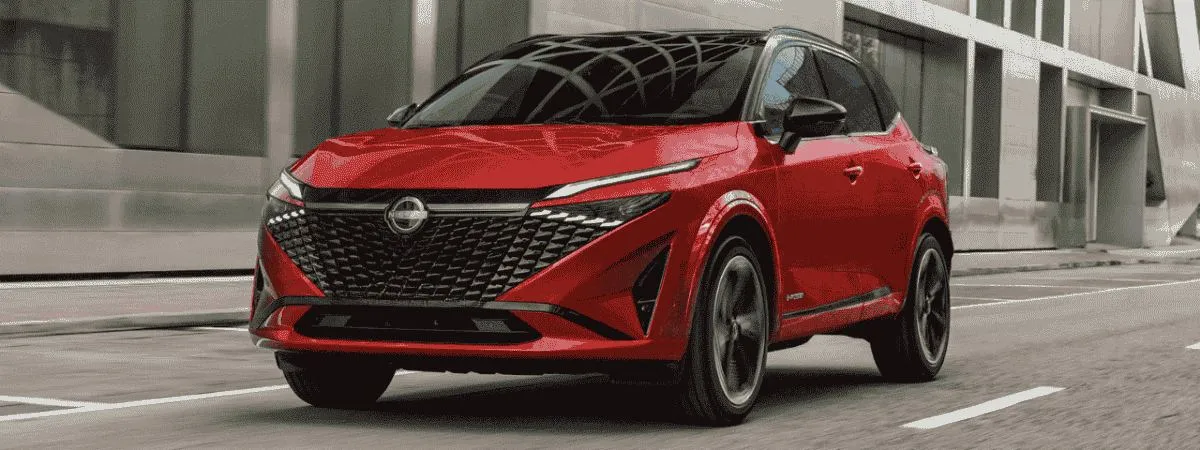
Nissan’s return: From fragility to redemption
nissan He had a hard time with the fame of his old boxes (those from between 2012 and 2017 that broke just by looking at them).
The current reality: If you buy a Sentra, Versa or Kicks of the latest batch, you get much more polished cooling technology and management software. They are no longer “glass” as before, but be careful: they are still not something to be treated like a racing car. If you are punctual with their services, they will respond well, but don’t get overconfident.
The gold standard: Why Toyota plays in another league
toyota He came up with two solutions that today make them the most recommended if you don’t want headaches:
Direct Shift-CVT: In its gasoline models (such as RAV4 either Corolla), they use a master trick: a physical first gear “really”. The car starts with a solid gear (hard and fast) and, once in motion, passes the baton to the CVT. This takes all the stress off the metal band and makes the case last much longer.
e-CVT (Hybrids): Pay attention here, because the name is confusing. The transmission of a Toyota Hybrid NO It has neither bands nor pulleys. They are planetary gears that, in the world of mechanics, are considered practically indestructible. It is possibly the most reliable transmission money can buy today.
Honda and Subaru: Balance and strength
Sling: Their boxes are usually the perfect middle ground. They are extremely balanced and fail very little, as long as you don’t get creative and only use the agency’s original oil.
subaru (Lineartronic): Since their cars are all-wheel drive, they use a metal chain instead of a conventional belt to withstand the effort. They are as robust as a tank, although over the years they tend to require attention to the solenoids (the “brain” which controls the passage of oil), a detail that you should monitor in the long term.
Repair costs and mechanics’ opinion
Let’s talk about money, because this is where it hurts. If a manual car runs out of life, you change the clutch and that’s it. But if one CVT Put your hand out, prepare for the blow.
What it costs you to take care of it (Preventive maintenance): Changing the oil and filters will cost you between $150 and $300 USD. It is a sacred investment that you have to make every 40,000 or 50,000 km if you want to sleep peacefully.
What the scare costs you (Major repair): If the box breaks and you have to change it, the bill at a serious workshop can range between $2,000 and $4,500 USDdepending on how modern your model is.
What the mechanics confess to you: «The mess with the CVT It’s not the engineering, it’s the story they sell us. Many manuals swear that the oil is ‘eternal’. In our cities, with our heat and potholes, that is a pure lie. The oil burns. If the owner is judicious and changes it on time, the box can withstand whatever they throw at it. If you believe the story about oil for life, the box says goodbye at 120,000 km.
Verdict: Is it worth buying a CVT in 2026?
The answer is not a “Yeah” or a “No” resounding; It all depends on how heavy your foot is and what you want the car for.
IT IS SUITABLE FOR YOU IF:
Your forte is moving around the city and what matters most to you is being comfortable and saving gas.
You are a relaxed driver, one of those who does not need to rush at every traffic light.
You have the discipline to invest in your preventive maintenance without fail.
You’re going for a hybrid of Toyota (that system e-CVT plays in another league of reliability).
You are getting a car from an agency with a well-backed warranty.
NOT SUITABLE FOR YOU IF:
You like to feel the power right away or need to make aggressive passes on the highway.
You live in very steep mountain areas and you usually drive your car fully loaded.
Are you one of those who forget about services or are looking for a car “of war” that endures mistreatment.
You plan to tow boats or heavy trailers.
You’re looking at a used car with a lot of miles on it and the previous owner doesn’t have a single invoice to prove he took care of the transmission.
Conclusion
By 2026, the CVT transmission is no longer the “time bomb” that kept us awake for years; He has matured a lot. Brands like toyota and Sling They have stood out by showing that they can be faithful and long-lasting machines. However, they are still precision pieces that do not forgive carelessness.
If you decide on one, treat it well, forget that myth of “oil forever” and you will have a soft and saving box for a long time. But if your thing is ruggedness that’s proof of anything, it’s better to stick with one of the old automatics or a good manual transmission.
Editorial by Gossipvehicle