
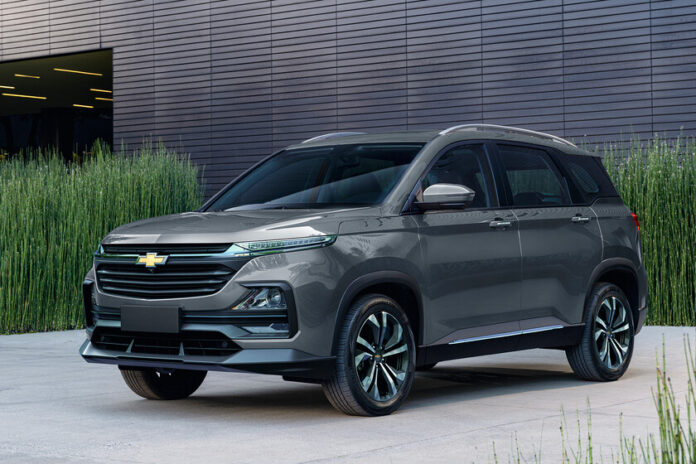
Since the Captiva returned to the streets as a 2022 model, it quickly became the darling of many families. It’s not magic: the truck hit hard in Mexico because it gives you a lot of space for your money, especially with that trick of putting seven people in one SUV that doesn’t cost you a fortune. It is, basically, the logical option for those looking for comfort without being left at zero.
But of course, after a couple of years of riding and struggling in traffic, the “little details” began to appear. Several owners have noticed that, with daily use, the mechanics and electronic gadgets sometimes get annoying.
In this analysis we are going to talk head-on about what is really failing in the Captivas 2022 to 2024. Without dizzying nonsense or the desire to scare anyone, we are going to see what is happening, why it happens and if it is really worth the investment, so that you can decide with your feet firmly on the ground.
Origin, platform and mechanical architecture
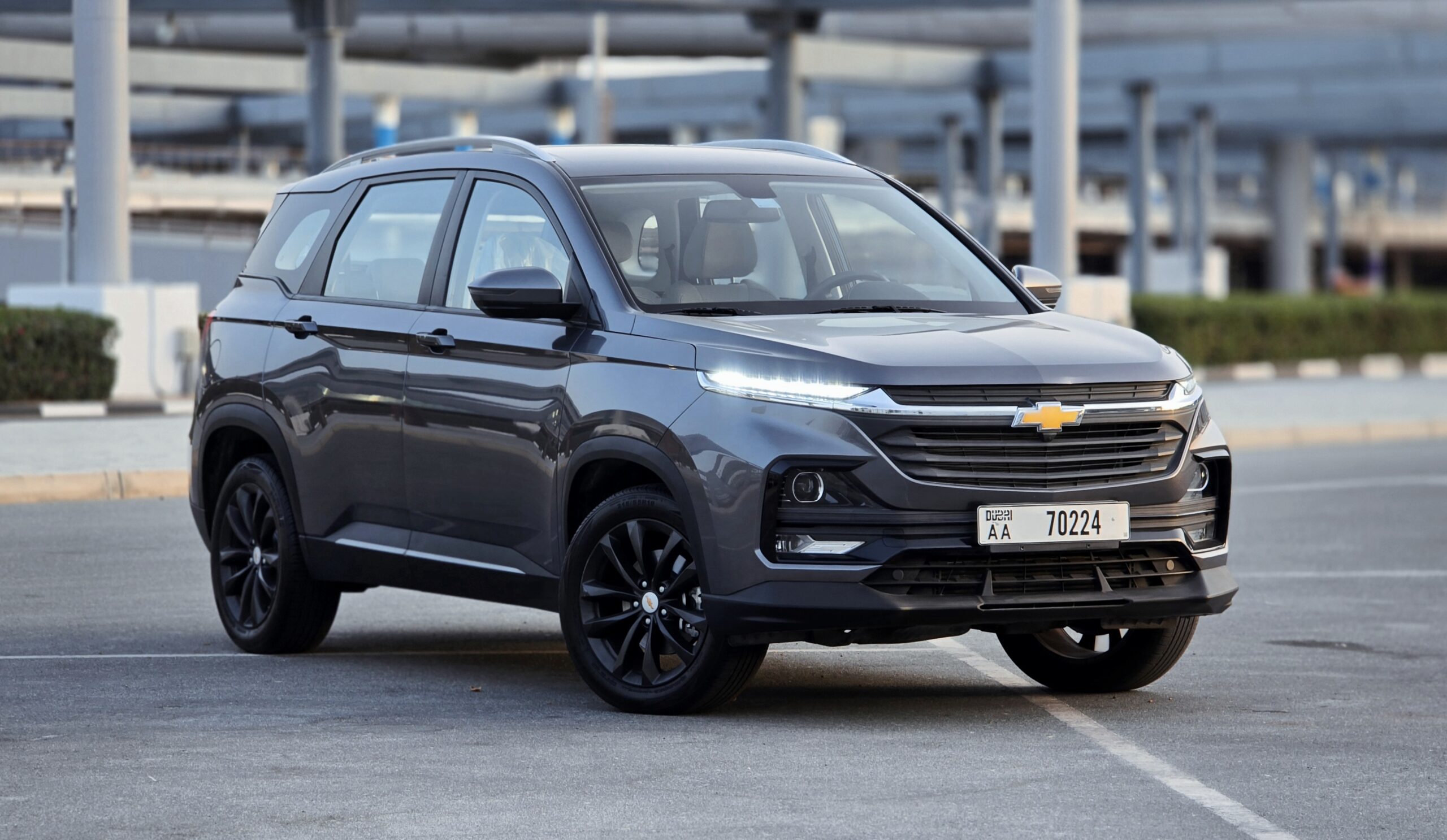
To understand if a truck is going to stand the test of time, you have to know where it really comes from. The Captiva that we see today on the streets of Mexico has nothing to do with the one from years ago (the one that came from Korea). This new version is the daughter of an alliance between Chevrolet and Chinese brands like SAIC and Wuling. Basically, it is a Baojun 530 with the logo of G.M.designed to be practical and productive.
If we look to see what it has under the hood, we find an engine designed for the city, not for racing:
The engine: It’s a small 1.5 liter with a turbo. It is not a beast, but its 144 horses are good for moving the family.
The box: It uses a CVT transmission (the kind that feels like a single continuous gear), although it is programmed to simulate 8 gears if you like to move it yourself.
The wheels: All thrust is forward; Don’t expect four-wheel drive here.
The suspension: It is the classic “old-fashioned” configuration: comfortable at the front and a little more rigid at the back to support the weight of the passengers.
In short, Chevrolet put together this package thinking that you are comfortable and have plenty of space, leaving aside speed or sporting power to focus on making the journey smooth.
Common failures reported on the 2022–2024 Chevrolet Captiva
Look, we have to make something clear: no car is perfect and just because it fails someone doesn’t mean it will happen to you too. But, if you look around the owners forums in Mexico or talk to mechanics, you will realize that there are certain “headaches” that are repeated in the Captive.
Here I tell you what is bothering the most, without dizzying technical nonsense:
1. The gearbox feels “loose”
The CVT transmission is great for saving gas, but it suffers a lot in heavy traffic or when driving the truck hard. Some owners say that they feel that the engine roars (revs go up) but the truck simply does not move the same way, or that it jerks when starting.
Why does it happen? Imagine that the truck weighs more than two tons with people on it; That’s a lot of effort for the transmission belt. If it gets too hot in a traffic jam, the computer “clips its wings” so it doesn’t break down.
The hit to the pocket: An oil change in the box will cost you between $3,500 and $5,000 pesos. But be careful, if the inside is polished, the heavy repair can range from $25,000 to $40,000 pesos.
2. The “tantrums” of the screen and electronics
Since everything is digital now, sometimes the software gets stuck. The 10-inch screen is very attractive, but it is not always the fastest.
What are you doing? It freezes out of nowhere, the CarPlay or the backup camera takes forever to turn on (or flashes). There are also reverse sensors that beep even if there is nothing behind.
The hit to the pocket: If you have a warranty, the agency will fix it by updating the software and they won’t charge you. If your time has passed, a reset or diagnosis can cost you between $1,000 and $2,000 pesos.
3. Use more gasoline than the brochure says
Many complain that, although the engine is small (1.5L), it consumes as if it were larger. In the technical sheets they say that it performs 14 km/l, but in the real world, in cities with traffic, people report between 8 and 10 km/l.
Why does it happen? Since the truck is heavy, the turbo has to work almost all the time to make it move with enthusiasm, and that is where the gasoline is “drinked.”
The solution: There is no choice but to be very gentle with your right foot and not start off as if you were in a race.
4. Noises in the back
If you go over potholes or bumps (which are abundant in Mexico), you could hear some “clacks” or squeaks in the rear wheels.
Why does it happen? The rear suspension rubbers (bushings) sometimes dry out or become a little loose. It’s not dangerous, but it is quite annoying.
The hit to the pocket: Changing those rubbers or checking the shock absorber bases will cost you between $2,500 and $4,500 pesos.
5. The brakes wear out quickly
It has been noticed that the front brake pads last less than expected or start to squeak very quickly.
What do you notice? The typical sharp grinding noise when braking slowly or the wheels filling with black dust very quickly.
Why does it happen? Between the weight of the Captiva and the fact that the original material is somewhat soft, the pads “cook” quickly with friction.
The hit to the pocket: A change of pads with their respective disc grinding costs you between $2,500 and $4,000 pesos, depending on how good a brand you get.
6. The battery “throws in the towel” soon
With so much screen and electronic system, the original battery sometimes can’t keep up, especially with the heat in various parts of the country.
What are you doing? It is difficult to start in the mornings or strange warnings begin to appear on the dashboard that there is no power.
The hit to the pocket: A good battery (such as LTH that can hold the trot) will cost you between $2,800 and $4,000 pesos.
Comparative analysis: Is the 2022–2024 Chevrolet Captiva reliable?
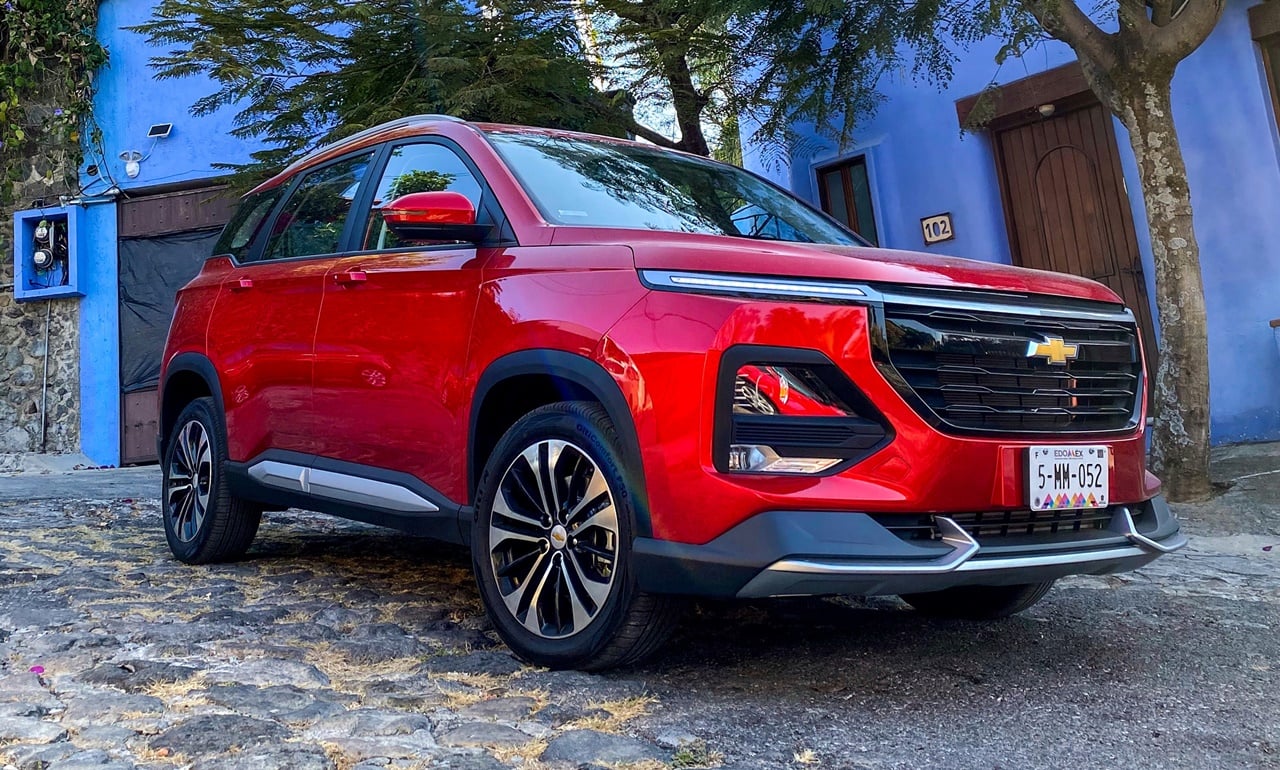
To be fair, we cannot judge the Captive alone; You have to see how it stands up against the other trucks that are competing for your money in Mexico, like the X-Trailthe MG HS wave Tiggo 7 Pro.
Against the Nissan X-Trail: The nissan It is the “old reliable” with years of support and comes with more safety assists (those that help you not crash), but be prepared, because it is much more expensive. The curious thing is that the X-Trail It has also had its “queveres” with the CVT box, so, whichever one you choose, both have to be very careful with the transmission.
Against the MG HS: Both have Chinese DNA and come from SAIC. The MG It feels a little more “luxurious” inside and handles more agile, but if your thing is to carry even the parakeet, the Captive It beats it by a landslide with its three rows of seats. For large families, the Chevrolet It is the smartest purchase.
Against the Chirey Tiggo 7 Pro: Chirey It arrived hitting hard with huge screens and very long guarantees that sweeten your ears. The problem is that they are new in the neighborhood. With the Captive you have peace of mind that there is an agency Chevrolet in almost every corner of Mexico in case you get stranded on the road or need a part quickly.
In a nutshell: the Captive It delivers and is reliable, as long as you know what you’re buying. It’s not a racing truck or a cargo truck; is a family SUV to be comfortable, calm and with plenty of space.
Maintenance costs in Mexico and spare parts
If you are going to brand new or already have one, don’t risk it: taking care of the warranty is sacred. In Mexico, Chevrolet supports you for 3 years or 60,000 kmwhichever comes first, so make sure you take her to her checkups on time so they don’t give you the hassle if something goes wrong.
Here is the information on what you are going to spend and what to expect:
How often and how much does it cost? The appointment with the workshop is every 12,000 km or once a year. The truth is, the prices in the agencies Chevrolet They are not bad at all: a simple service will cost you in a few $2,200 pesosand now a more complete one (where they change spark plugs, fluids and check the brakes well) is hitting the $5,500.
And the pieces? Since many of these trucks are sold in Mexico, you can even find the basics like filters or brake pads in the soup. Now, if you are unlucky enough to have a crash and need something very specific like an LED headlight or fascia, arm yourself with a little patience. Since they come from China, these parts can take two weeks to a month to arrive, something that, to be honest, is happening to almost all brands today.
In summary: It is an “easy to maintain” truck that is not going to give you green hairs with service costs, as long as you do not have to wait for a body part.
Is it worth buying a used 2022–2024 Chevrolet Captiva?
If you are wondering whether to buy one Captive used is a good idea, the short answer is Yeahbut don’t go in blindly; Before releasing the money, you have to put yourself in detective mode to avoid surprises.
Here I tell you what to look out for so that you don’t get screwed:
The transmission history (CVT): This is the most important thing. Ask for service notes; If the truck has already passed 50,000 km, yes or yes They should have changed the transmission oil. When you try it, start from zero and make sure it doesn’t vibrate badly or that the revolution needle is dancing like crazy.
How “runny” it is inside: As it is a family van, look to see the third row rails and the baby seat anchors (ISOFIX). There you will realize how rough the treatment of the previous owners was; If they are badly damaged, you can imagine how the rest of the car fared.
Mileage: Normally in Mexico is about 15,000 km per year. If you see a 2022 that already has more than 60,000 km, it is better to take it to a trusted mechanic to thoroughly check the shock absorbers and, above all, make sure the turbo is not tired.
Who is it the ideal purchase for? The Captive It is a gem for families of 4 to 6 people who need space for backpacks, groceries or weekend getaways. It is for those who prefer to have a spacious and high-performing truck without having to spend their souls to pay for it, leaving aside the pretensions of luxury or driving fast.
Objective conclusion
To close with a flourish: the Chevrolet Captiva 2022–2024 does just what it promises, which is give plenty of space to Mexican families without having to pay a fortune. It is not a perfect truck – the gearbox could be more agile and the suspension a little softer – but it is not the “headache” that some exaggerated comments on social networks would have you believe.
If you decide on one, whether agency or pre-owned, the trick to making it last for many years is simple: don’t skip maintenance. Pamper it with good quality oils, do not weigh it down as if it were a moving truck and, above all, drive it calmly. If you treat that turbo engine and the CVT box well, it will respond well to you on a day-to-day basis.
At the end of the day, it is a transportation tool designed to keep you and your loved ones comfortable, safe and with all the space you need for your daily trips or vacations.
Editorial by Gossipvehicle